


What Has Changed in 200 Years, and What Hasn’t: The Story of Chandukaka Saraf
Two hundred years is a long time to stay in business. It is even longer to remain relevant.
In 1827, in the small town of Baramati in Maharashtra, Late Shri Bhaichandji Shah laid the foundation of what would become Chandukaka Saraf. What began as a humble jewellery business grew slowly, through generations, relationships and an unwavering commitment to purity and trust. Today, nearly two centuries later, the journey has grown to 19 stores, with a presence that continues to expand across Maharashtra, Karnataka and beyond.
But the most interesting part of a 200-year journey is not simply how long it has lasted. It is how much the world around it has changed. The way we live has changed. The way we shop has changed. The way we celebrate has changed. And, naturally, the way we choose and wear jewellery has changed with it.
Yet, through all these changes, some things have remained remarkably constant. The desire to celebrate. The joy of giving. The value of something made to last. And above all, the trust between a jeweller and the families who walk through its doors.
From a Small Beginning in Baramati to a Legacy Across Generations

Every legacy has a beginning, and for Chandukaka Saraf, that beginning goes back to Baramati in 1827. The early years were rooted in simplicity and service. The family built its reputation not through scale, but through relationships and a commitment to doing things right. Over the generations, the business grew alongside the families it served.
The visionary Late Shrimant Bhaichandji Shah, whose commitment to purity and excellence laid the foundation for a legacy of trust. His great-great-grandson, Shrimān Kishorkumar Shah, now the current Chairman along with his son Samyak Kishorkumar Shah, carries forward this legacy, which was started with a small-scale goldsmith business.
Shrimān Bhaichandji Shah’s son, Late Shrimān Jyotichandji Shah, and his grandson Late Shrimān Chandulalji Shah expanded this vision by offering fair pricing and quality, building strong community trust through home visits for jewellery repairs and sales. Late Shrimān Jyotichandji Shah, known for travelling village to village with gold and silver products, further strengthened the family’s reach, while Late Shrimān Chandulalji Shah established the family’s first jewellery store in Baramati, transforming the business into a household name.
Today, Shri Kishorkumar Jindatta Shah, Chairman, together with Smt. Neha Kishorkumar Shah, Director, and Shri Samyak Kishorkumar Shah, Managing Director, represent the current generation carrying that legacy forward.
When the Customer Changed, Jewellery Changed Too
There was a time when jewellery was largely associated with life’s biggest milestones. A wedding. A birth. A festival. An anniversary.
Gold jewellery, in particular, held a special place in the Indian household. It was purchased with thought, preserved carefully and often passed from one generation to another. A necklace could become part of a daughter’s wedding, a bangle could carry the memory of a grandmother, and a pair of earrings could quietly travel through decades of family history. That relationship with jewellery still exists. But the modern customer has added many more chapters to it.
Today, jewellery can mark a promotion, a first salary, a birthday, a personal achievement or simply a moment when someone wants to buy something for themselves.
The young customer may not wait for a wedding to buy a diamond. A gemstone piece can be chosen because its colour feels personal. Silver can become part of everyday styling. Gold can be worn alongside contemporary pieces rather than reserved for traditional occasions.
Jewellery has moved from being something we wear for an occasion to something we wear as an expression of ourselves. And the industry has had to evolve accordingly.
A Legacy Is Built by More Than the People Whose Names Are on It
Behind a 200-year story and behind every piece of jewellery is a much larger ecosystem of people; the artisans who bring designs to life, the teams who understand customers, the vendors and partners who support the business, and the employees who make every store and every customer interaction possible.
Today, more than 1,000 team members, artisans, vendors and employees form part of the wider Chandukaka Saraf journey. Their contribution is what turns a family legacy into a living institution.
Some carry forward skills and knowledge that have existed for generations. Others bring entirely new perspectives, technologies and ways of working.
Together, they represent the balance that has allowed Chandukaka Saraf to keep moving. The hands may be different. The ideas may be new. The customer may have changed. But the larger purpose remains connected to the same foundation laid in Baramati nearly 200 years ago.
Style Your Bridal Look with Chandukaka Saraf
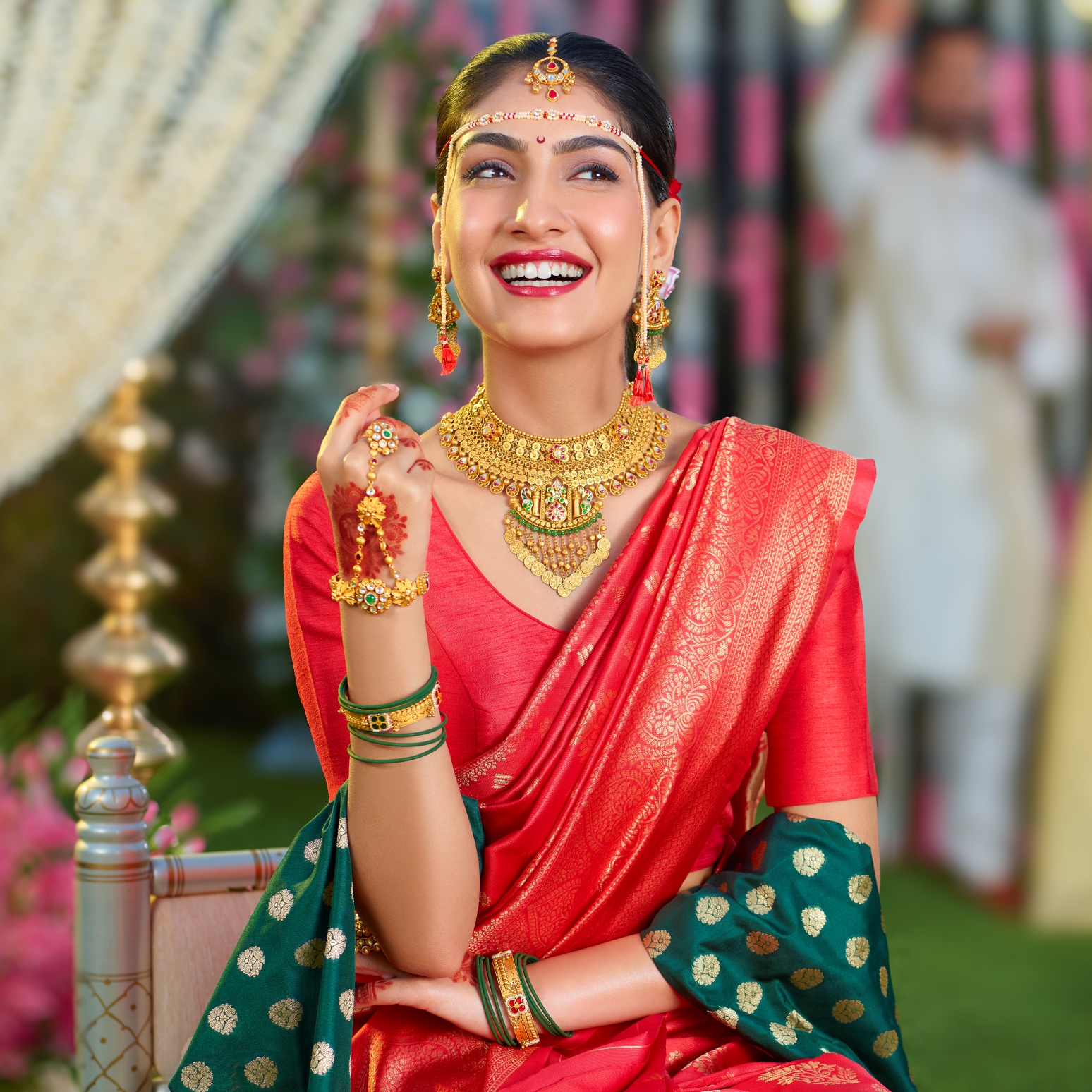
Whether you’re a modern bride, a classic one, or love a mix of both styles, our collection and styling tips are here to help you find just what you’re looking for. We believe every bride deserves a look of her choice on her special day and we are here to make it happen!
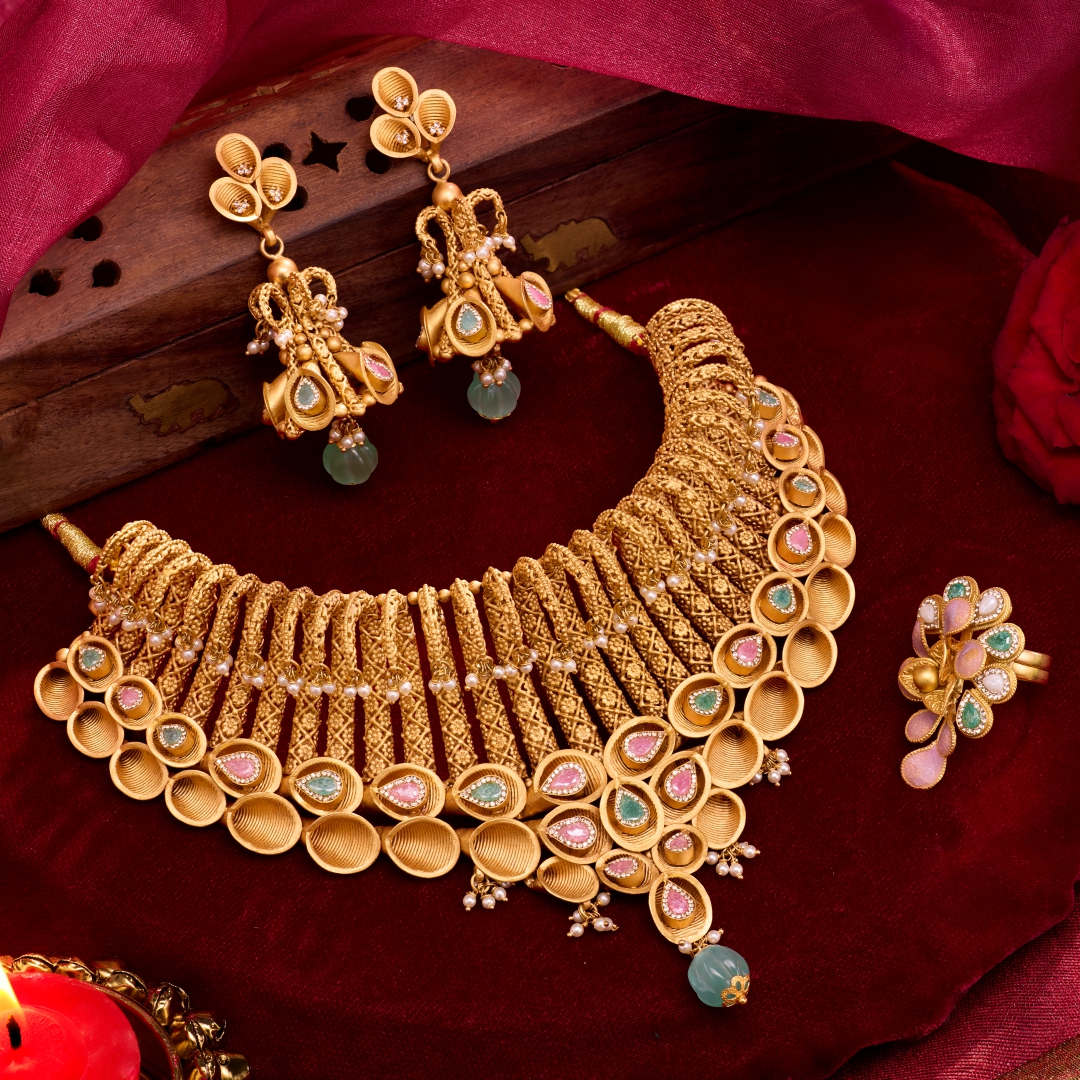
- Royal Heritage Enhance your look with a classic silk or brocade saree by layering Gold Necklaces and matching Gold Jhumkas, Bangles and Ring from our collection. This ensemble celebrates the richness of heritage while exuding eternal grace.
- Glamorous Fusion For a contemporary bridal look, pair a fitted lehenga with a statement Diamond choker, lightweight earrings, intricate bangles and ring. This fusion makes sure to balance modernity along with tradition, allowing the bride to shine her own way!
- Elegant Minimalism Go for lightweight diamond bangles with an outfit of your choice. Also, pair Diamond Earrings and Choker to get that classy look which shows a modern yet minimal touch. Remember, diamonds never go wrong with any outfit!
- Cascading Gemstones Incorporating gemstone jewellery hues with traditional saree/lehenga, or modern simplicity wedding wear, will always draw attention and elevate your look mesmerisingly.
- Timeless Accessories Complete your look with the addition of stunning Maang Tikka and Kamarbandh, as these unique pieces bring together the bridal look.
What Hasn’t Changed
Technology has transformed how we discover jewellery. Social media has changed how trends travel. E-commerce has changed how we shop. Designs have become more versatile, and customers have become more informed and individual in their choices.
But some things cannot simply be replaced by changing times. Trust still matters. Purity still matters. Craftsmanship still matters. And relationships still matter. Because jewellery is rarely just a purchase.
It can be a mother’s gift to her daughter. A husband’s surprise. A family’s wedding tradition. A reward for a personal achievement. Or something bought today with the quiet hope that it will one day become an heirloom.
That emotional connection is perhaps the one constant that has survived every change. A diamond bought today may become tomorrow’s family story. A contemporary design may eventually become someone’s treasured memory of a particular time in their life. And a simple gold piece may continue to carry a story long after the person who first wore it is gone.
200 Years is a beginning of a new story

A 200th anniversary naturally makes us look back. But a legacy is ultimately measured by how confidently it looks forward. The next generation will have different expectations. It will discover jewellery differently, shop differently and wear it differently. It will bring new ideas about design, individuality and what luxury means.
For a brand that has grown and flourished for 200 years, staying relevant will mean continuing to listen. That is the real lesson of the journey from 1827 to today. Chandukaka Saraf did not remain relevant by making the same jewellery for 200 years. It remained relevant by understanding that every generation changes; and by changing with it.
From its humble beginnings in Baramati to 19 stores today, the journey has grown in scale. From gold to a wider world of diamonds, gemstones and silver, the choices have grown. From one generation of customers to many, the relationship has grown.
But at the heart of it, the promise remains familiar. To create with care. To serve with integrity. To earn trust, rather than simply inherit it. And to make jewellery that has a place in the lives of the people who wear it.
Two hundred years ago, the world looked very different. Two hundred years from now, it will look different again.
The jewellery may change. The customer will change. The way we celebrate will change. But perhaps some things are simply timeless. We will still want to celebrate the people we love. We will still want to mark the moments that matter. We will still want to give something that lasts. And we will still treasure the stories we pass from one generation to the next.
That is what has changed in 200 years.
And that is what hasn’t