

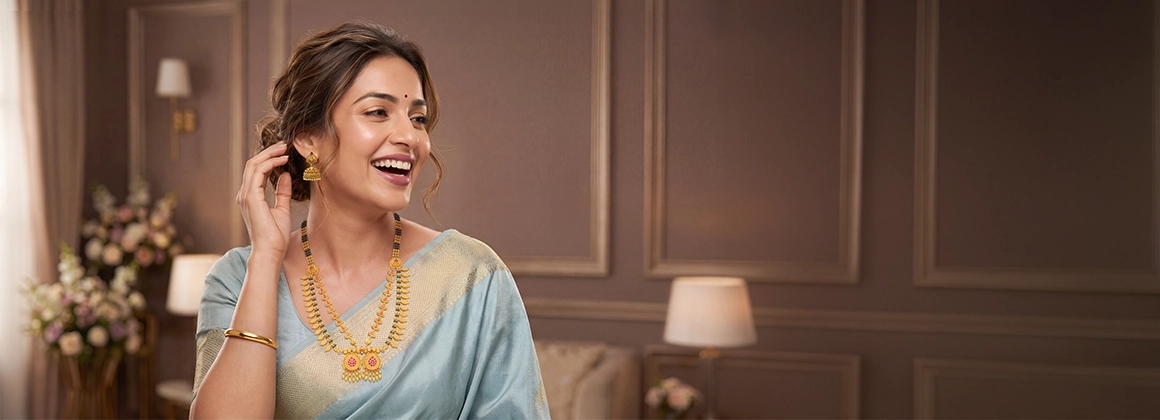
More Than a Tradition: How the Mangalsutra Became a Woman’s Personal Statement

There was a time when the mangalsutra had a clearly defined role. It was gifted at the wedding, worn as a symbol of marriage, and recognised instantly for what it represented. It carried the weight of tradition, family values, and generations of cultural heritage. Today, that meaning remains unchanged. What has changed is how women choose to express it.
The modern mangalsutra is no longer confined to a single design, a fixed style, or a set of expectations. It has evolved into something far more personal. For many women, it is not just a symbol of marriage but an extension of their identity, reflecting their personality, lifestyle, and individual sense of style. This ability to evolve while retaining its emotional significance is what has allowed the mangalsutra to remain relevant across generations.

From expectation to self-expression
Perhaps the most significant evolution has been the shift from obligation to choice. Previous generations often wore the mangalsutra because tradition expected them to. Today, women are making conscious decisions about how they want this symbol to look and feel.
They are choosing designs that align with their personalities. They are looking for pieces they genuinely enjoy wearing every day. They are seeking jewellery that reflects who they are rather than simply following convention.
This desire for personal expression has reshaped the entire category. Women are increasingly drawn to minimalist pendants, contemporary silhouettes, delicate chains, and versatile designs that integrate seamlessly into modern wardrobes. The mangalsutra is no longer just something a woman receives. It is something she chooses.
The growing appeal of diamond Mangalsutras
Diamonds have played an important role in redefining the mangalsutra for a new generation. Rather than replacing traditional elements, diamonds have enhanced them, adding a contemporary layer of sophistication while preserving the emotional significance of the piece.
A diamond mangalsutra effortlessly transitions between professional settings, family celebrations, travel, and everyday moments. Its versatility has made it especially appealing to women who value jewellery that adapts to different aspects of their lives.
Natural diamonds also carry a timeless appeal. Their brilliance, rarity, and enduring value make them a meaningful addition to a piece already rich in symbolism. This combination of sentiment and sophistication has contributed to the growing popularity of diamond mangalsutras among modern buyers.
A symbol that continues to evolve
One of the reasons the mangalsutra has remained relevant for generations is its ability to adapt without losing its essence.
A grandmother’s mangalsutra may reflect the design language of her era. A mother’s piece may represent a balance between tradition and practicality. A daughter’s choice may prioritise versatility, personal style, and contemporary aesthetics.
Yet the meaning remains remarkably consistent. The mangalsutra continues to symbolise love, commitment, partnership, and shared journeys. What has changed is the freedom women now have to express those values in ways that feel authentic to them.
That is what makes the modern mangalsutra so powerful. It is more than a piece of jewellery. It is more than a tradition.
It is a reflection of personal identity, evolving lifestyles, and enduring relationships. It honours the past while embracing the present, proving that traditions do not remain relevant because they stay the same. They remain relevant because they evolve alongside the people who cherish them.
And with every new generation of women, the story of the mangalsutra continues to be written anew.